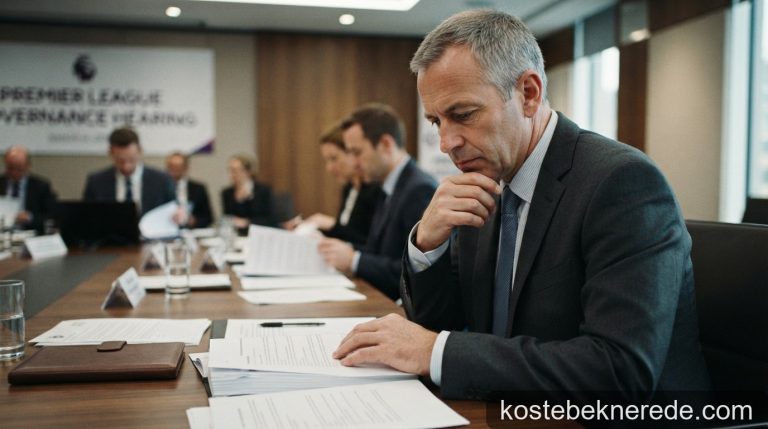
Manchester City has been found guilty by an independent Premier League commission on 115 charges related to financial rule breaches and a failure to cooperate with the league’s investigation. The club, which maintains its innocence, has until October 2, 2026, to formally lodge an appeal against these findings. This appeal will not be a complete re-hearing but will focus on specific legal grounds, with significant implications for the club and the Premier League.

Key Takeaways from the Verdict
- An independent commission found Manchester City guilty of 80 financial wrongdoing charges and 34 charges for failing to cooperate with the Premier League’s investigation.
- The breaches involved “sham” contracts and agreements to inflate revenue and reduce costs by over £900 million, violating Premier League and UEFA spending limits.
- Manchester City has until October 2, 2026, to appeal the verdict, asserting the opinion contains “clear material errors, of law, principle and fact, and is unsafe.”
- Sanctions, which could include financial penalties, points deductions, or even relegation, will be determined in a separate private hearing.
- The appeal process will involve a new three-person commission, whose decision will be final, with no further appeal to the Court of Arbitration for Sport (CAS).
The Independent Commission’s Findings
The independent commission’s verdict, announced on September 29, 2026, concluded a 42-day hearing that spanned from December 2024. The findings were comprehensive, detailing how Manchester City allegedly engaged in a systematic effort to circumvent financial regulations. The commission determined that the club orchestrated “sham” contracts with commercial partners and utilized other “sham” agreements to artificially inflate revenue and reduce costs by more than £900 million.
This conduct led to misstated accounts and concealed crucial financial information from both auditors and football regulators. Furthermore, the club was found to have significantly breached both Premier League and UEFA spending limits over a nine-season period, from 2009-10 to 2017-18.
A critical aspect of the verdict was the commission’s conclusion regarding Manchester City’s lack of cooperation. The club was found guilty of 34 out of 35 charges related to its failure to cooperate with the Premier League’s four-year investigation, indicating “concerted efforts to stop and frustrate the Premier League investigation.” This non-cooperation charge highlights a significant procedural breach in addition to the financial irregularities.
Manchester City’s Grounds for Appeal
Manchester City has publicly expressed its disappointment and surprise at the verdict, vehemently maintaining its innocence. The club’s official statement indicates an intention to pursue all available appeal avenues, arguing that the commission’s opinion contains “clear material errors, of law, principle and fact, and is unsafe.” While the specific legal grounds for their appeal will be detailed in their formal submission by October 2, 2026, it is anticipated that their challenge will focus on several key areas.
Firstly, City may challenge the commission’s interpretation of the financial rules themselves, arguing that their accounting practices were compliant or that the rules were applied retrospectively or unfairly. Secondly, they are likely to dispute the factual findings, presenting what they describe as a “comprehensive body of irrefutable evidence” to counter the commission’s conclusions regarding “sham” contracts and inflated revenues.
Thirdly, the club could contest the procedural fairness of the investigation or the hearing itself, particularly concerning the charges of non-cooperation. Their appeal will aim to demonstrate that the commission’s verdict is fundamentally flawed on legal, principled, or factual grounds.
The Appeal Process and Timeline
Should Manchester City lodge an appeal by the October 2, 2026 deadline, a new three-person commission will be convened to hear the case. The members of this appeal commission will be selected by Sir Gary Hickinbottom, who chairs the Premier League’s judicial panel. It is crucial to understand that this appeal will not be a complete re-hearing of the original case.
Instead, it will focus on specific grounds of challenge raised by Manchester City, examining whether the initial commission made errors in law, principle, or fact.
The timeline for such an appeal process can vary significantly. While some appeals might conclude within six weeks, the sheer scale and complexity of this case, involving 115 charges and extensive financial documentation, suggest it could take several months, potentially even longer. The proceedings of the appeal hearing will remain private and confidential until a final outcome is published.
A key distinction from previous cases, such as City’s successful appeal against a UEFA ban at the Court of Arbitration for Sport (CAS), is that the decision of this Premier League appeal commission will be final. There will be no further avenue for appeal to CAS, making this the definitive legal battle within the football regulatory framework.
Potential Sanctions and Their Impact
The question of sanctions remains separate from the guilty verdict and the ongoing appeal. A private hearing before the independent commission will address potential punishments, and no sanctions have been announced yet. However, the range of potential penalties is broad and could have profound implications for Manchester City.
Possible sanctions include substantial financial penalties, which could run into hundreds of millions of pounds. More significantly, sporting sanctions such as points deductions are a real possibility, which could impact the club’s league position in current or future seasons. In the most severe scenarios, the commission could consider relegation from the Premier League or even expulsion from the league. The outcome of the appeal will directly influence the severity of any sanctions.
If the appeal is successful, some or all of the charges could be overturned, potentially mitigating or eliminating penalties. Conversely, if the appeal fails, the original verdict stands, and the commission will proceed with determining appropriate sanctions based on the confirmed breaches. Such outcomes could significantly affect player contracts, transfer strategies, and commercial partnerships, potentially altering the club’s competitive landscape for years to come.
Broader Implications for the Premier League
The verdict against Manchester City and the subsequent appeal process carry significant implications for the Premier League as a whole. This case underscores the league’s commitment to enforcing its financial regulations and maintaining the integrity of the competition. A successful prosecution and upheld verdict would send a strong message to all clubs regarding compliance with financial fair play rules and cooperation with investigations.
Conversely, if Manchester City’s appeal is successful in overturning a significant portion of the charges, it could raise questions about the robustness of the Premier League’s investigative and judicial processes. Regardless of the final outcome, this high-profile case is likely to prompt a review and potentially a strengthening of financial regulations across the league.
It also highlights the increasing scrutiny on club ownership, financial transparency, and the mechanisms in place to ensure a level playing field. The resolution of this case will undoubtedly shape the future landscape of financial governance in English top-flight football.
The Road Ahead for Manchester City
Manchester City now faces a critical period as it prepares to formally lodge its appeal against the independent commission’s verdict. The club’s legal team will be meticulously preparing their arguments, aiming to demonstrate “material errors” in the original ruling. The appeal process, while potentially lengthy, will be the club’s final opportunity within the Premier League’s judicial framework to challenge the findings.
The outcome will not only determine the immediate future of Manchester City, including any potential sanctions, but also set a significant precedent for financial fair play enforcement across the Premier League. Football enthusiasts and stakeholders will be closely watching as this complex legal battle unfolds, with its far-reaching consequences for one of the world’s most prominent football leagues.
参考资料
- thesun.ng
- premierleague.com
- nbcsports.com
- theguardian.com
- thenationalnews.com
- youtube.com
- wikipedia.org
- independent.co.uk
- mirror.co.uk
- cbssports.com
- skysports.com
- theguardian.com
About the Author